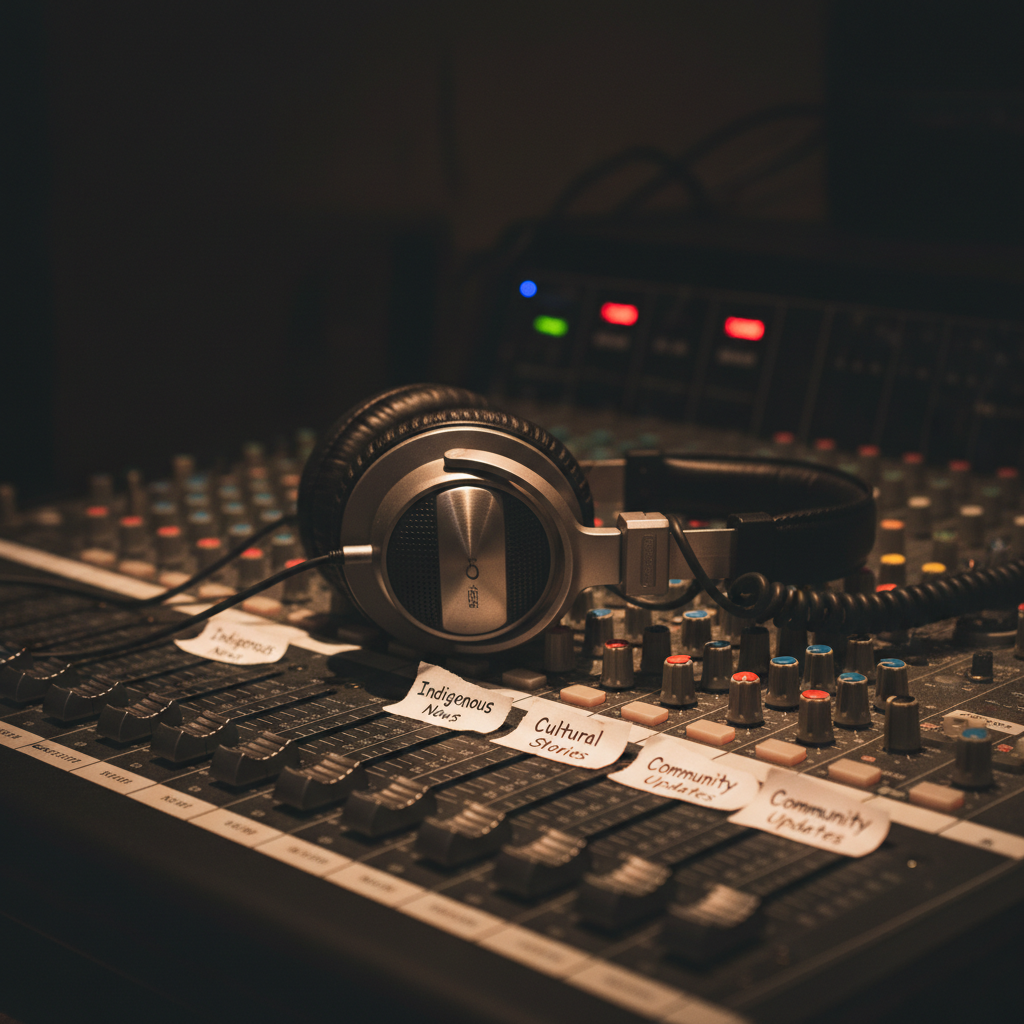
A close-up of a professional audio mixing desk in a dimly lit control room, its faders and knobs carefully set, with small handwritten labels reading “Indigenous News,” “Cultural Stories,” and “Community Updates.” A pair of slightly worn, high-end studio headphones with a brushed metal frame rests gently across the console. Soft, low-key lighting from the right casts long, dramatic shadows that highlight the contours and textures of the equipment. The background recedes into darkness with only a few soft indicator lights visible, enhancing the mood of concentration and late-night broadcasting. Captured in photographic realism with a shallow depth of field, the image conveys seriousness, dedication, and the craft of Native radio production.

Native Not American

Native Not American is a weekly radio show exploring Indigenous news, culture, and perspectives. Broadcast Sundays at 5pm PST from Olympia.
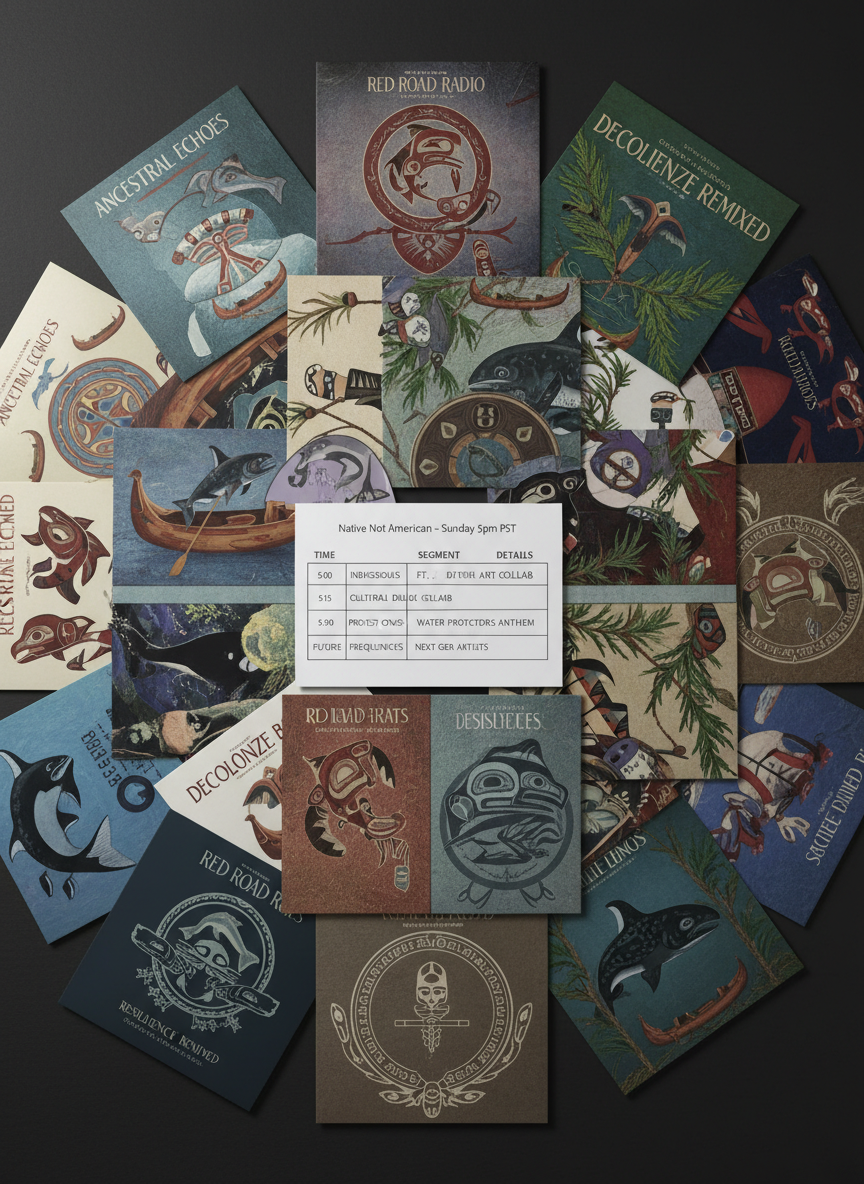
An overhead view of a circular arrangement of vinyl records and CDs, each with carefully designed covers referencing Indigenous news, culture, and resistance through symbols like cedar boughs, salmon, canoes, and coastal patterns. At the center lies a clean, modern station log sheet titled “Native Not American – Sunday 5pm PST” with time-coded segments for news, views, and music. Cool, diffuse studio lighting evenly illuminates the scene, bringing out the textures of matte paper and glossy discs. The composition is symmetrical and balanced, shot in photographic realism with sharp focus throughout. The atmosphere feels organized, intentional, and culturally grounded, ideal for illustrating curated Indigenous programming.
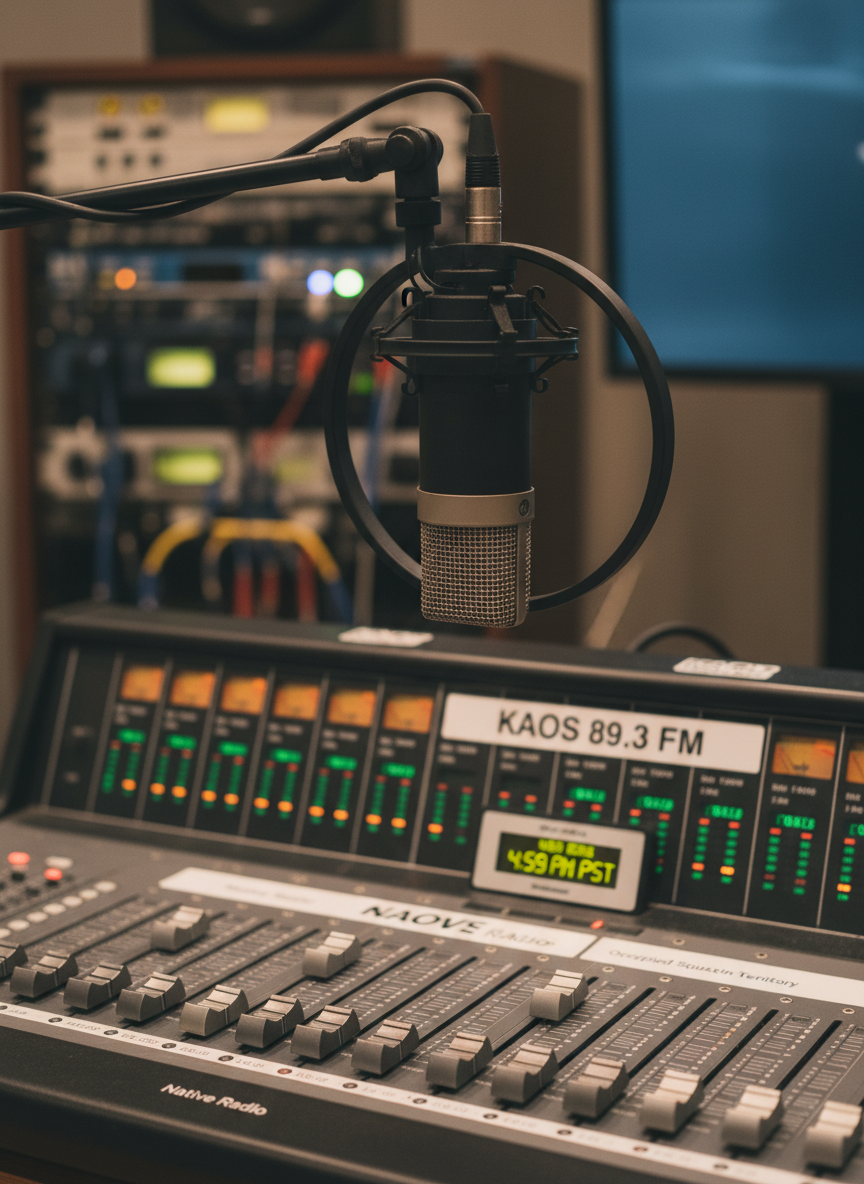
A sleek, contemporary broadcast microphone with a matte black finish and fine metal mesh, suspended in a shock mount in front of a soundboard labeled “KAOS 89.3 FM.” The console is covered in tactile sliders, glowing LED levels in green and amber, and a small digital clock set to 4:59 pm PST. Subtle decals reference “Native Radio” and “Occupied Squaxin Territory.” Soft studio lighting illuminates the microphone from the side, creating a refined highlight on its contours while the background fades into a tasteful bokeh of equipment. Shot from a slightly low angle in photographic realism, the mood is focused, authoritative, and ready-for-air, embodying professional Indigenous news coverage.
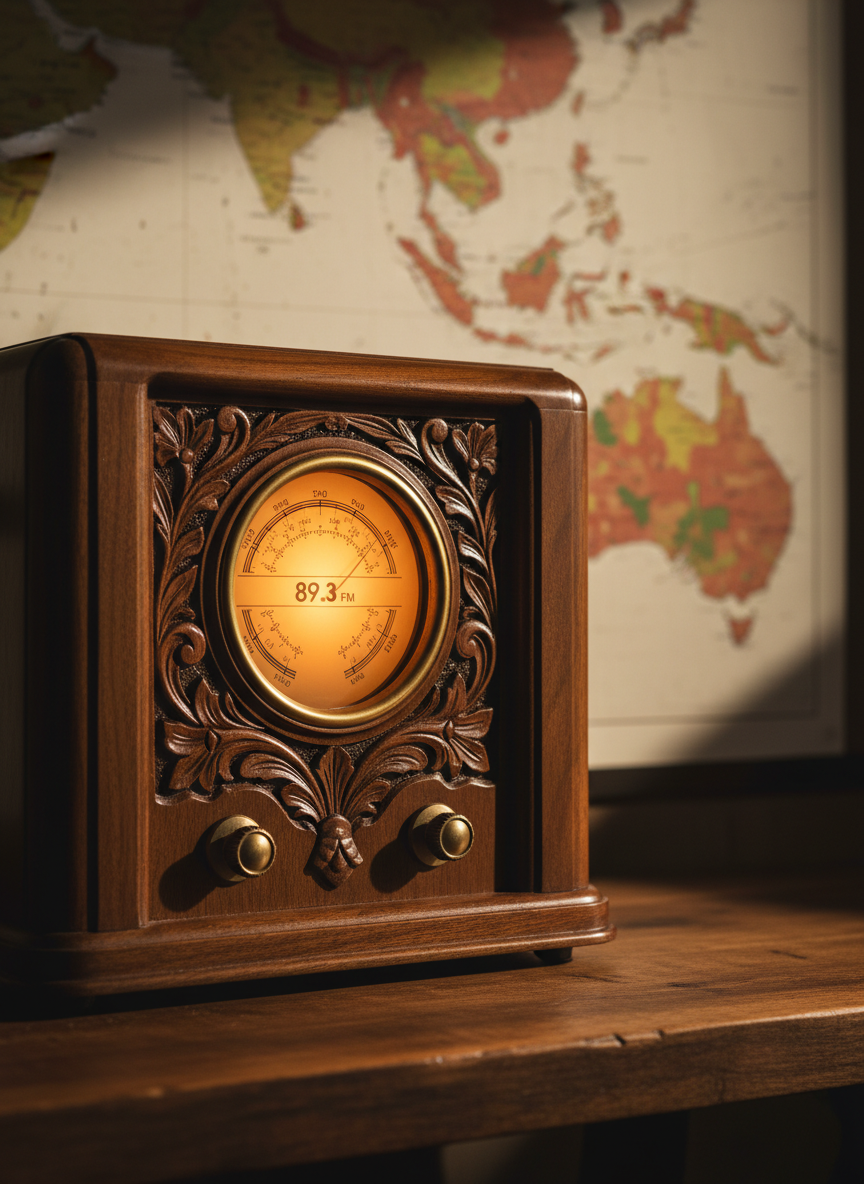
A polished, vintage-style wooden radio console with intricate carvings and a softly glowing analog dial tuned to 89.3 FM, resting on a rich, dark cedar table. Behind it, a wall map outlines the Pacific Northwest with Squaxin territory subtly highlighted in earthy tones. Warm, directional studio lighting from the upper left creates gentle highlights on the wood grain and casts soft shadows, giving depth and texture. Captured at eye level in photographic realism, the composition follows the rule of thirds, with a shallow depth of field that blurs the map edges. The mood is professional yet intimate, evoking trust, history, and Indigenous presence in contemporary radio.

Recent Tracks

Explore recent episodes with track lists, artist credits, and links to support Indigenous musicians and discovery.

A close-up of a professional audio mixing desk in a dimly lit control room, its faders and knobs carefully set, with small handwritten labels reading “Indigenous News,” “Cultural Stories,” and “Community Updates.” A pair of slightly worn, high-end studio headphones with a brushed metal frame rests gently across the console. Soft, low-key lighting from the right casts long, dramatic shadows that highlight the contours and textures of the equipment. The background recedes into darkness with only a few soft indicator lights visible, enhancing the mood of concentration and late-night broadcasting. Captured in photographic realism with a shallow depth of field, the image conveys seriousness, dedication, and the craft of Native radio production.
An overhead view of a circular arrangement of vinyl records and CDs, each with carefully designed covers referencing Indigenous news, culture, and resistance through symbols like cedar boughs, salmon, canoes, and coastal patterns. At the center lies a clean, modern station log sheet titled “Native Not American – Sunday 5pm PST” with time-coded segments for news, views, and music. Cool, diffuse studio lighting evenly illuminates the scene, bringing out the textures of matte paper and glossy discs. The composition is symmetrical and balanced, shot in photographic realism with sharp focus throughout. The atmosphere feels organized, intentional, and culturally grounded, ideal for illustrating curated Indigenous programming.
A sleek, contemporary broadcast microphone with a matte black finish and fine metal mesh, suspended in a shock mount in front of a soundboard labeled “KAOS 89.3 FM.” The console is covered in tactile sliders, glowing LED levels in green and amber, and a small digital clock set to 4:59 pm PST. Subtle decals reference “Native Radio” and “Occupied Squaxin Territory.” Soft studio lighting illuminates the microphone from the side, creating a refined highlight on its contours while the background fades into a tasteful bokeh of equipment. Shot from a slightly low angle in photographic realism, the mood is focused, authoritative, and ready-for-air, embodying professional Indigenous news coverage.